
Last updated November 22, 2026
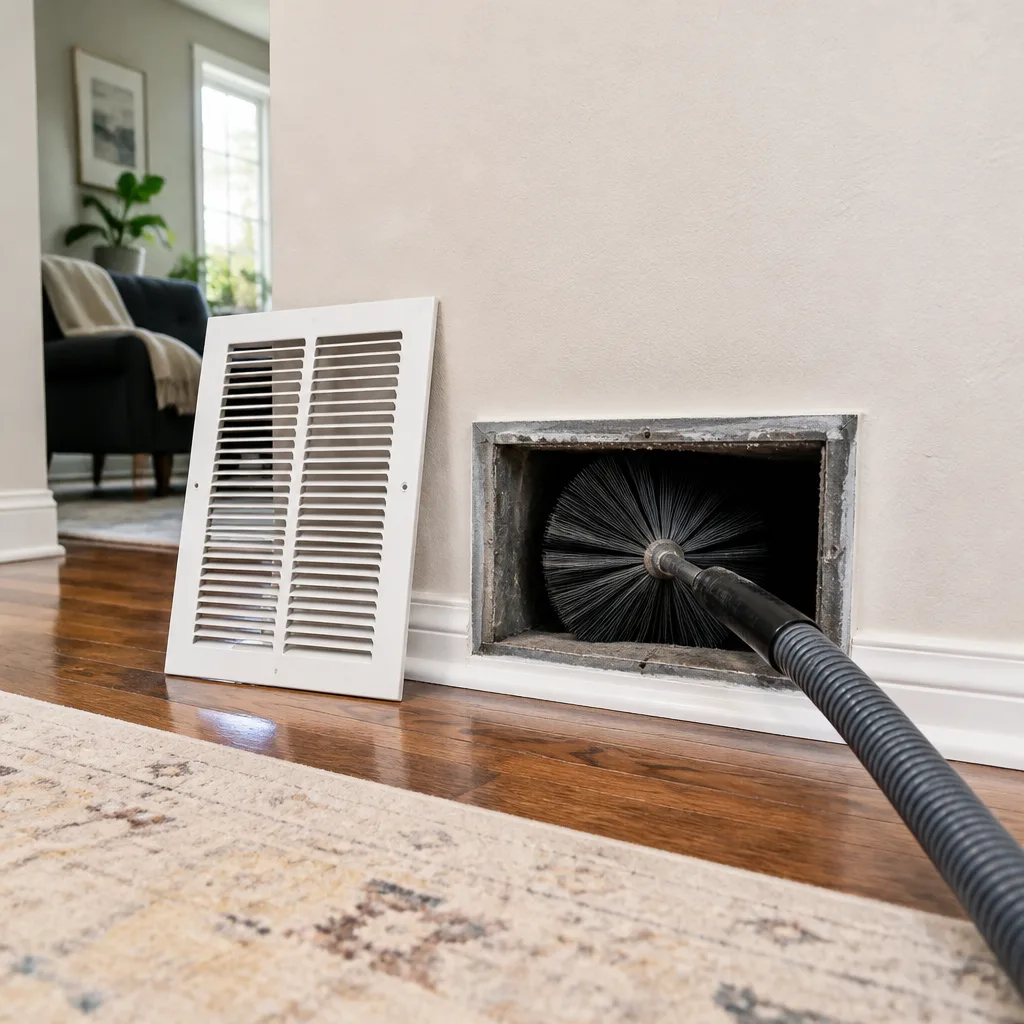 Whole-home duct cleaning
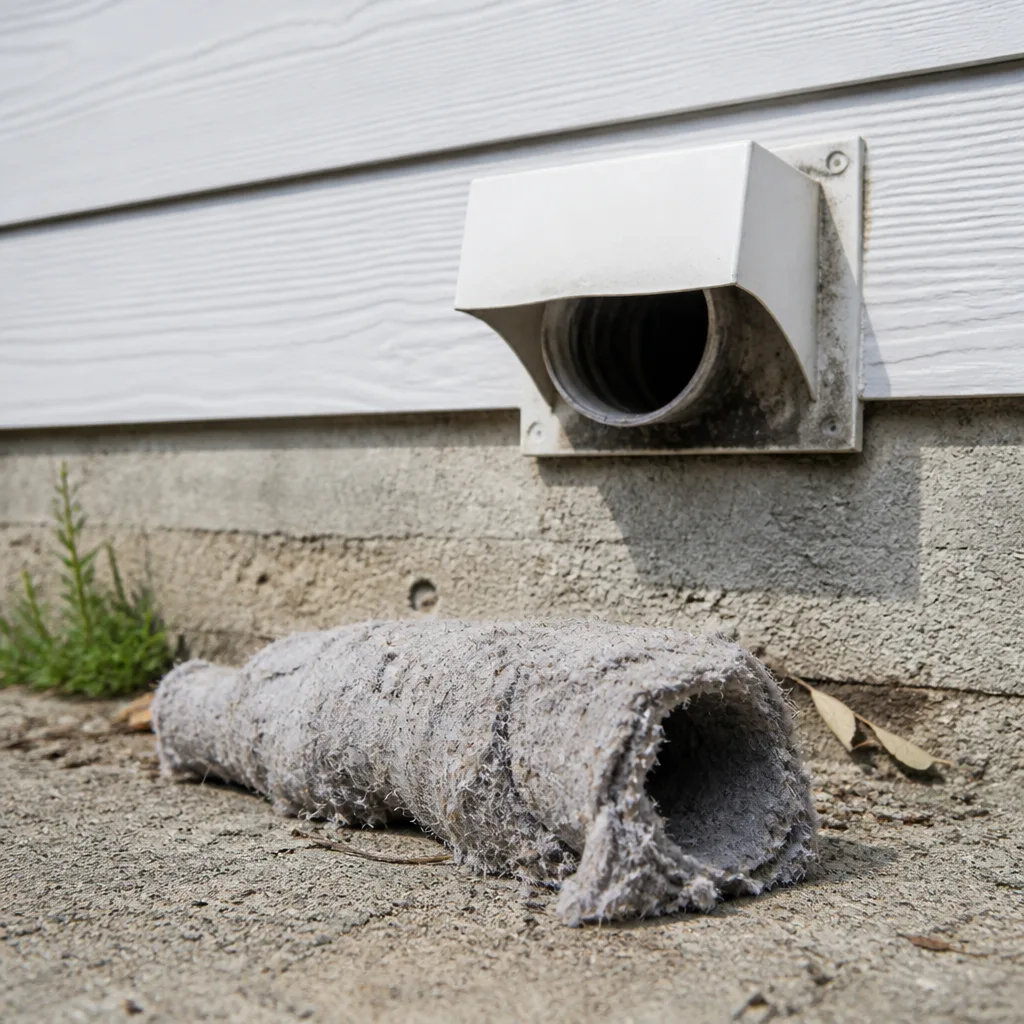 Dryer vent cleaning
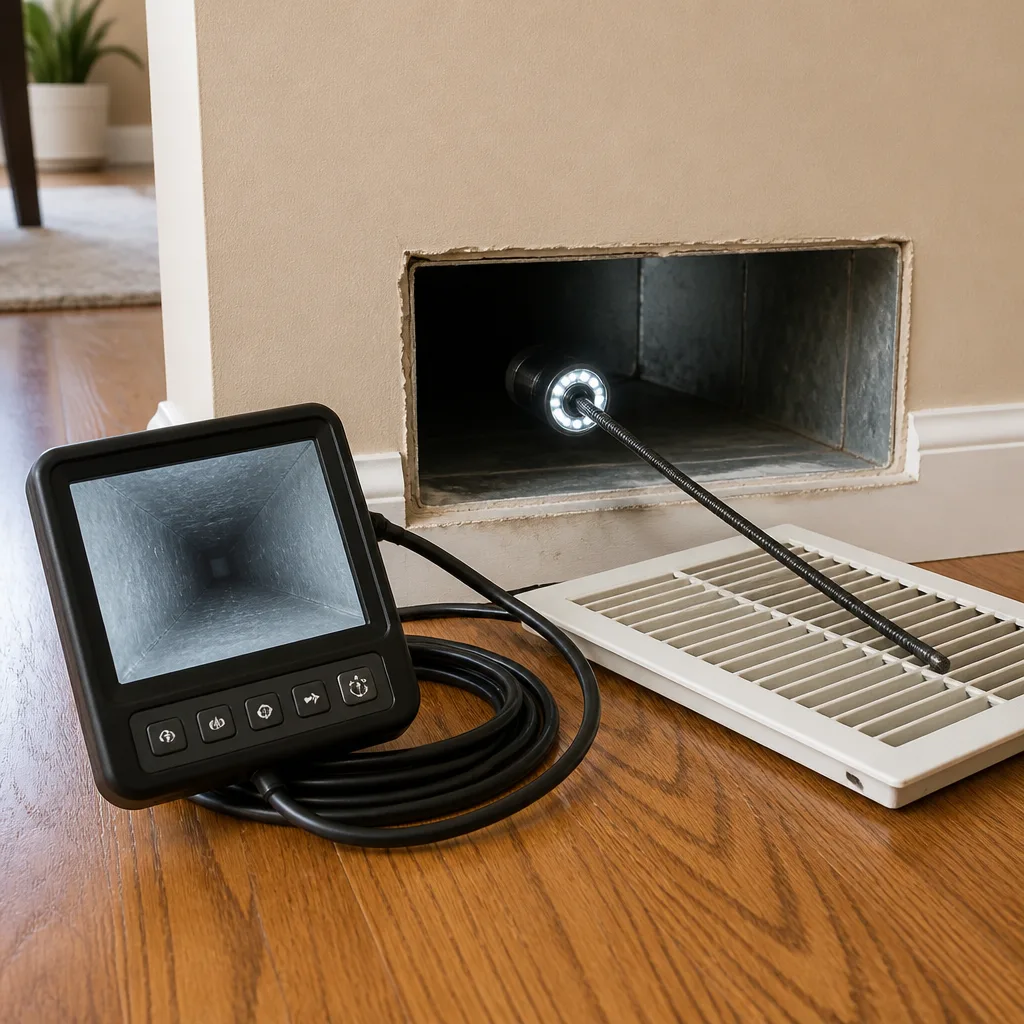 Camera inspection
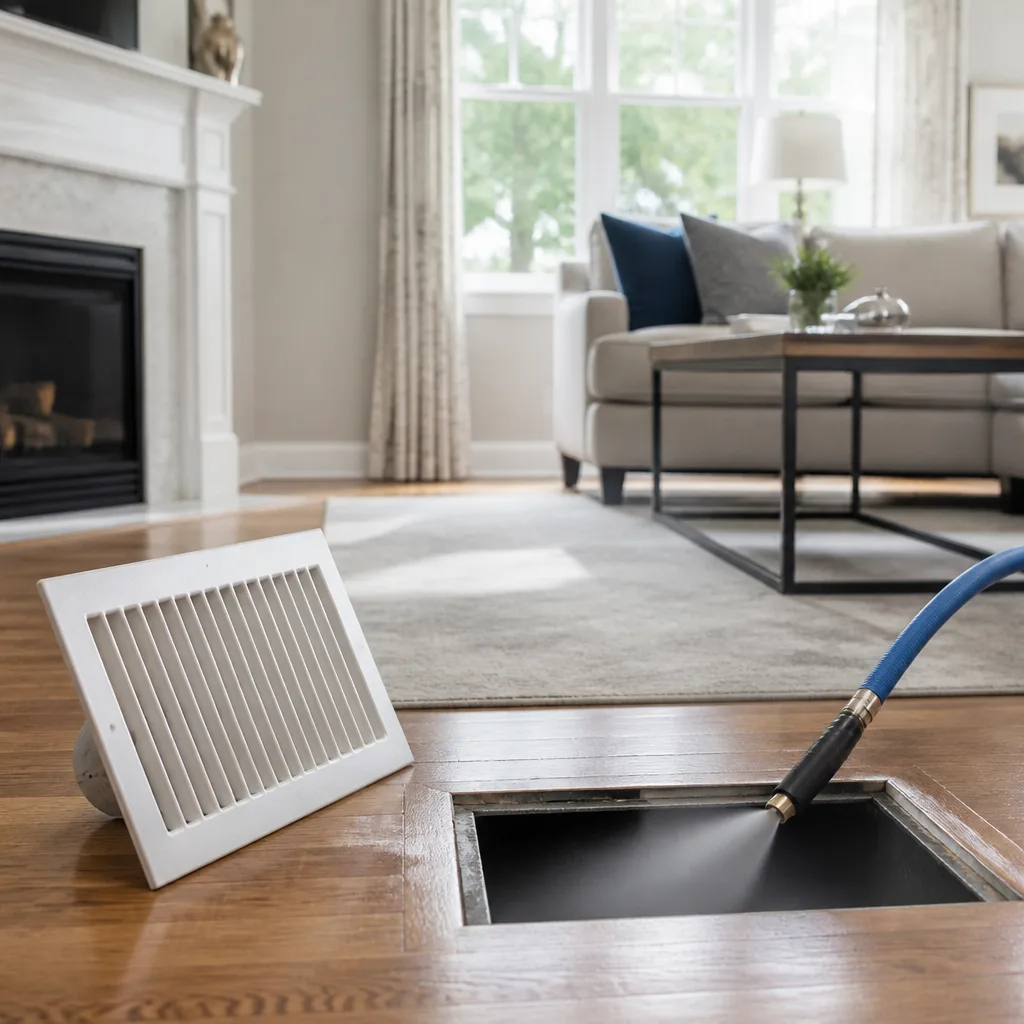 Sanitizing & deodorizing
Whole-system duct and dryer vent check with before-and-after photos - you see exactly what came out of your vents
That "$99 whole-house special" is a bait ad - the real number appears once they are in your hallway, or the "clean" is a shop-vac at the register. We photograph the inside of your ducts before and after instead.
Air Duct Cleaning Cost Breakdown: The Astoria Homeowner’s Reference for 2026
In Astoria, you can find duct cleaning quotes ranging from under $100 to over $800 for what sounds like the same house. That spread isn’t a market inefficiency. It’s a signal that two completely different services are being sold under the same name, and most homeowners have no framework for telling them apart. A flat-rate ad and a full mechanical cleaning of the entire system share a phrase and almost nothing else. One runs a shop vac through the visible ducts; the other cleans the air handler, the supply and return runs, the registers, and the coil. This guide breaks down the actual cost drivers behind a legitimate quote in Astoria, what entry-level pricing can and cannot include, and the scope questions that let you compare two bids on equal footing.
Quick Answer
Air duct cleaning in Astoria typically runs $350 to $650 for a standard apartment or single-family home with 8 to 15 registers, and $600 to $900 for larger homes, multi-unit properties, or systems with difficult access. Entry-level flat-rate pricing of $79 to $150 usually covers only register-to-boot vacuuming of a few openings and cannot include a true whole-system clean given equipment and labor costs. The written estimate sets the final price, and a legitimate quote itemizes scope, not just a total.
Styles & brands we work with
- Whole-home duct cleaning
- Dryer vent cleaning
- Camera inspection
- Sanitizing & deodorizing
Table of Contents
- What Actually Drives Cost in an Astoria Duct System
- What a $79 – $150 Flat Rate Really Covers
- Add-Ons: Which Are Warranted and Which Are Upsold
- How to Compare Two Quotes Apples-to-Apples
- Cost-Per-Linear-Foot Benchmarks for the NYC Metro in 2026
- How Astoria’s Building Layouts Affect Where Your Quote Lands
- What a Professional Whole-System Cleaning Involves
- Common Mistakes to Avoid
What Actually Drives Cost in an Astoria Duct System
No two duct systems are billed identically because no two are shaped identically. A quote reflects the physical reality of what has to be cleaned, and in Astoria’s building stock that reality shifts block by block. The cost drivers below are the ones that move a quote the most, in rough order of impact.
- Linear footage of duct. The total length of supply and return runs determines how much cleaning equipment time is required. A compact apartment may have 40 feet of trunk and branch runs; a three-bedroom house can have triple that.
- Number of supply and return registers. Every supply register and every return grille is a separate opening that needs to be removed, cleaned, and reinstalled. Ten to fifteen registers is a common middle range for an Astoria apartment or small house.
- Accessibility and layout. Ducts buried behind finished ceilings or inside soffits take longer than exposed runs in a basement. This is one of the biggest variables in older Astoria buildings.
- Whether the air handler and coil are included. Cleaning the furnace or air handler cabinet and the evaporator coil is where a lot of the contamination actually lives. A quote that skips the air handler skips the dirtiest component.
- System condition. Heavy debris, a renovation worth of drywall dust, or a system with disconnected runs adds labor. Duct repair and sealing may need to come first before cleaning even makes sense.
If you want to understand the cleaning method itself before talking price, our overview of air duct cleaning explains what a whole-system clean actually entails. Cost follows scope. Anything that expands the scope expands the price, and the reverse is also true.
What a $79 – $150 Flat Rate Really Covers
A $79 to $150 flat rate covers register-to-boot vacuuming of a small number of openings, and that is close to its structural ceiling. Once you account for the cost of professional equipment, the labor of a two-person crew, and travel time, a whole-system clean cannot be delivered for under $150. Something has to give, and it’s usually the components that matter most: the air handler, the coil, the return side, and the branch runs beyond the first few feet.
Here’s a practical way to think about it. A professional-grade duct cleaning system from Rotobrush or Nikro is purpose-built to reach deep into a duct run with a rotary brush and high-powered negative pressure, pulling debris out of the entire system while keeping the home clean. Running that equipment through a full system with ten or more openings is not a fifteen-minute visit. When a quote promises the whole house for under a hundred dollars, one of three things is happening:
- The service is register-only vacuuming, with no mechanical agitation inside the ducts and no air handler cleaning.
- Extra components are added on as separate line items once the technician is on site, so the final invoice is much higher than the advertised price.
- No real equipment is used, just a shop vacuum and a brush, which can stir up debris without capturing it.
None of these is a scam in the sense of taking money for nothing. They’re just a different service wearing the same name. The problem is only when the homeowner believes they’re buying the whole-system clean and finds out otherwise. If a quote feels too good to be true, ask directly: “Does this price include the air handler and coil?” The answer usually settles it.
Add-Ons: Which Are Warranted and Which Are Upsold
Some add-ons are genuinely worth the money. Others get tacked onto every visit whether or not the home needs them. Here’s how to separate the two, with the Astoria conditions that make each one relevant or not.
Sanitizing (often warranted)
A sanitizing treatment after cleaning is reasonable when the system shows signs of microbial growth, when the home has had a water event, or when there is persistent mustiness. It’s a dedicated service for us, backed by recognized air-quality brands like Abatement Technologies, and it makes sense when there’s a real reason. On a dry, clean system with no odor or visible growth, it’s usually optional.
Dryer vent cleaning (almost always warranted)
A clogged dryer vent is a fire-safety concern, not a comfort one, and lint accumulation builds regardless of how careful you are with laundry. The vent is separate from the HVAC system but worth cleaning during the same visit. Our dryer vent cleaning service is included in our five-service scope for that reason.
UV installation (sometimes warranted)
A UV light in the air handler can help in specific cases, but it is not a substitute for cleaning and it doesn’t fix a dirty coil. If a technician pitches a UV system before the system is even cleaned, that’s a sales pitch rather than a diagnosis.
Duct repair and sealing (warranted when leaks are found)
Disconnected or leaky ducts pull dust and unconditioned air into the system, and cleaning a leaking system is like cleaning a room with the window open. Repairing and sealing is the fix, and it’s typically quoted separately because the scope depends on what’s found. We repair what we find rather than clean around it, and HVAC cleaning visits are a natural point to catch leaky runs.
How to Compare Two Quotes Apples-to-Apples
Two quotes can be $300 apart and cover completely different work. Before comparing totals, compare scope. Use these questions, verbatim, on both bids, and write the answers down.
- Does the price include the air handler and evaporator coil? If the answer is no on one quote and yes on the other, they aren’t comparable.
- How many supply registers and return grilles are included? Get a specific number, not a range. Anything beyond that number may be an add-on charge.
- Are the ducts cleaned with mechanical agitation and negative pressure, or vacuumed at the register only? The first is a real clean; the second is a surface pass.
- What equipment is used? Professional-grade systems from Rotobrush, Nikro, or Abatement Technologies are the right answer. A shop vac is not.
- Will you show before-and-after photos of my own ducts? Anyone with confidence in their clean will say yes.
- Is the price flat per system, or will it change once you’re on site? A flat price per system agreed before work starts is the only way to avoid a surprise invoice.
Also ask whether duct repair and sealing is included where leaks are found, or whether it’s a separate quote. In Astoria’s older buildings, leaky and disconnected runs are common, and a quote that treats them as a surprise upsell is not the one to accept. One flat price per system, agreed before work starts, with before-and-after photos, is the model to hold out for.
Cost-Per-Linear-Foot Benchmarks for the NYC Metro in 2026
In the New York metro in 2026, legitimate whole-system duct cleaning generally falls in the $4 to $8 per linear foot range for the ductwork itself, with the system-wide total typically $350 to $900 depending on scope and access. Astoria tends to land in the middle-to-upper half of that range because building density and access complexity add labor that a suburban ranch with exposed basement ducts does not incur.
| Scope Item | Typical Est. Range (NYC Metro, 2026) |
|---|---|
| Standard whole-system clean (8 – 15 registers, air handler included) | $350 – $650 |
| Larger home or multi-unit property (15+ registers) | $600 – $900 |
| Per-linear-foot benchmark (ductwork only) | $4 – $8 / linear foot |
| Duct repair and sealing (small, isolated leak) | $250 – $500 |
| Duct repair and sealing (extensive, multiple runs) | $500 – $1,200+ |
| Sanitizing treatment | $150 – $350 |
| Dryer vent cleaning (standalone) | $100 – $200 |
These are typical estimates for the metro market, not a quote for your home. The written estimate sets the final price, and it should reflect your actual register count, access conditions, and whether repair and sealing is included. Treat the table as a way to sanity-check a quote, not to negotiate one down to a number that doesn’t reflect the work.
How Astoria’s Building Layouts Affect Where Your Quote Lands
Astoria is a mix of pre-war apartment buildings, mid-century row houses, and newer construction, and the ductwork in each behaves differently. A quote that assumes a generic suburban layout will underestimate the labor in most of these. Here’s how the local building stock tends to move a quote toward the top or bottom of the range.
- Pre-war apartments with soffited or concealed duct runs. Ducts buried behind finished ceilings or inside wall chases take longer to access and clean. Expect the quote to sit in the upper half of the range.
- Row houses with basement mechanicals. Exposed trunk lines in a basement are the easy case: faster access, fewer surprises, and a quote closer to the metro median.
- Converted and subdivided units. Duct systems that were retrofitted or shared across converted units often have disconnected or oddly routed runs. Repair and sealing frequently turns up here.
- Renovation dust. Astoria’s continuous renovation cycle means many homes see drywall and construction dust pulled into return ducts. Heavy debris adds cleaning time, and a first clean after a renovation is often heavier than a routine one.
The climate matters too, in a less obvious way. New York’s humid summers put real moisture load on a cooling coil, and a coil that stays damp between cycles gathers dust into a paste that a quick vacuum won’t remove. That’s one more reason the air handler and coil need to be in scope. If the system is fighting something larger than ordinary dust, our air duct cleaning specialty page explains when a full-system evaluation makes sense.
What a Professional Whole-System Cleaning Involves
A proper whole-system clean is a sequence of steps, not a single pass, and understanding it makes a quote easier to read. A typical visit works like this:
- Inspection. The technician inspects the air handler, the supply and return runs, the registers, and the coil, and notes any disconnected runs, leaks, or heavy contamination.
- Protection and negative pressure. Registers are removed and the system is put under negative pressure so debris is captured rather than released into the home.
- Mechanical agitation. A rotary brush on a professional-grade line, from Rotobrush or Nikro, is run through the supply and return runs to loosen debris from the walls of the duct.
- Air handler and coil cleaning. The cabinet and evaporator coil are cleaned, since contamination settles where the air slows down.
- Register and grille cleaning. Each register and return grille is cleaned and reinstalled.
- Repair and sealing, if needed. Leaks and disconnected runs found during inspection are repaired and sealed before the system is put back together.
- Before-and-after photos. Photos of your own ducts document what was found and what was cleaned.
This is why the equipment and the scope, not the advertisement, determine the price. Our technicians have up to 10 years of experience, and we use professional-grade equipment designed specifically for duct systems, with air-quality brands like Honeywell and Guardsman available where a filtration upgrade is warranted. No step in that sequence can be skipped without leaving something dirty.
Safety note
If your inspection turns up a suspected gas line concern near the air handler, or an electrical panel issue affecting the system, that work belongs to a licensed specialist in those trades. Don’t open a panel or touch a gas line yourself. A duct system is safe to clean, but the equipment around it may not be, and it’s always worth flagging to the technician rather than working around.
Common Mistakes to Avoid
- Comparing total prices without comparing scope. A $150 quote and a $500 quote are rarely the same work. Write down the register count and air handler inclusion for each, and the gap usually explains itself.
- Assuming the air handler is included. Many entry-level quotes clean only the register boots. Ask directly whether the air handler and coil are in scope, because that’s where a lot of the contamination lives.
- Buying a UV system before the system is cleaned. A UV light on top of a dirty coil doesn’t solve the problem. Clean first, then decide whether an air-quality upgrade is warranted.
- Skipping the dryer vent because the HVAC quote is already large. The dryer vent is a separate fire-safety concern, and in Astoria’s dense buildings there’s no reason to leave it unchecked.
- Accepting a quote with no photos or inspection notes. Before-and-after photos of your own ducts are the simplest proof that the clean actually happened. A legitimate specialist will not hesitate to provide them.
- Cleaning a leaking or disconnected system. Ask whether the technician will repair and seal leaks found during inspection, or whether those will become a surprise second invoice.
- Treating a low base price as the total. Ask whether the price is flat per system agreed before work starts, or whether per-vent and per-component charges will be added on site.
See the difference
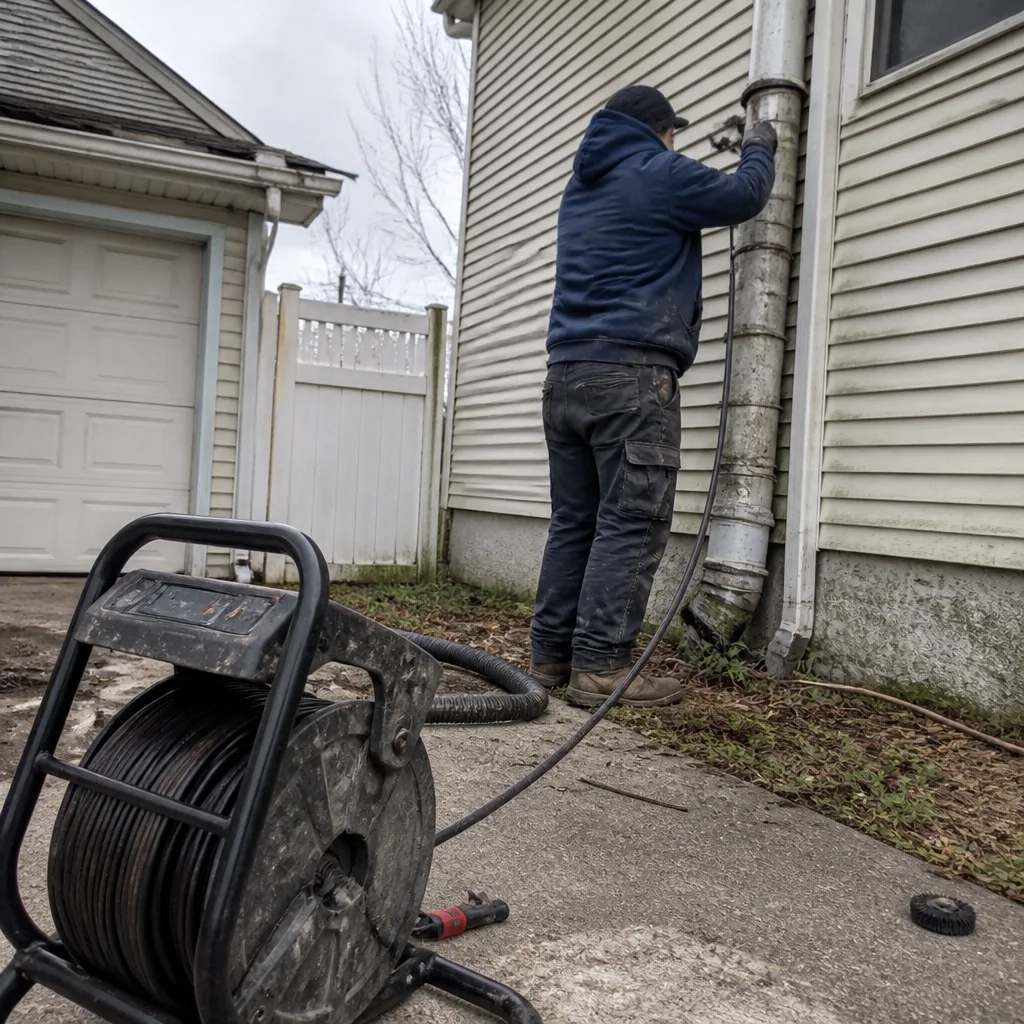 Before
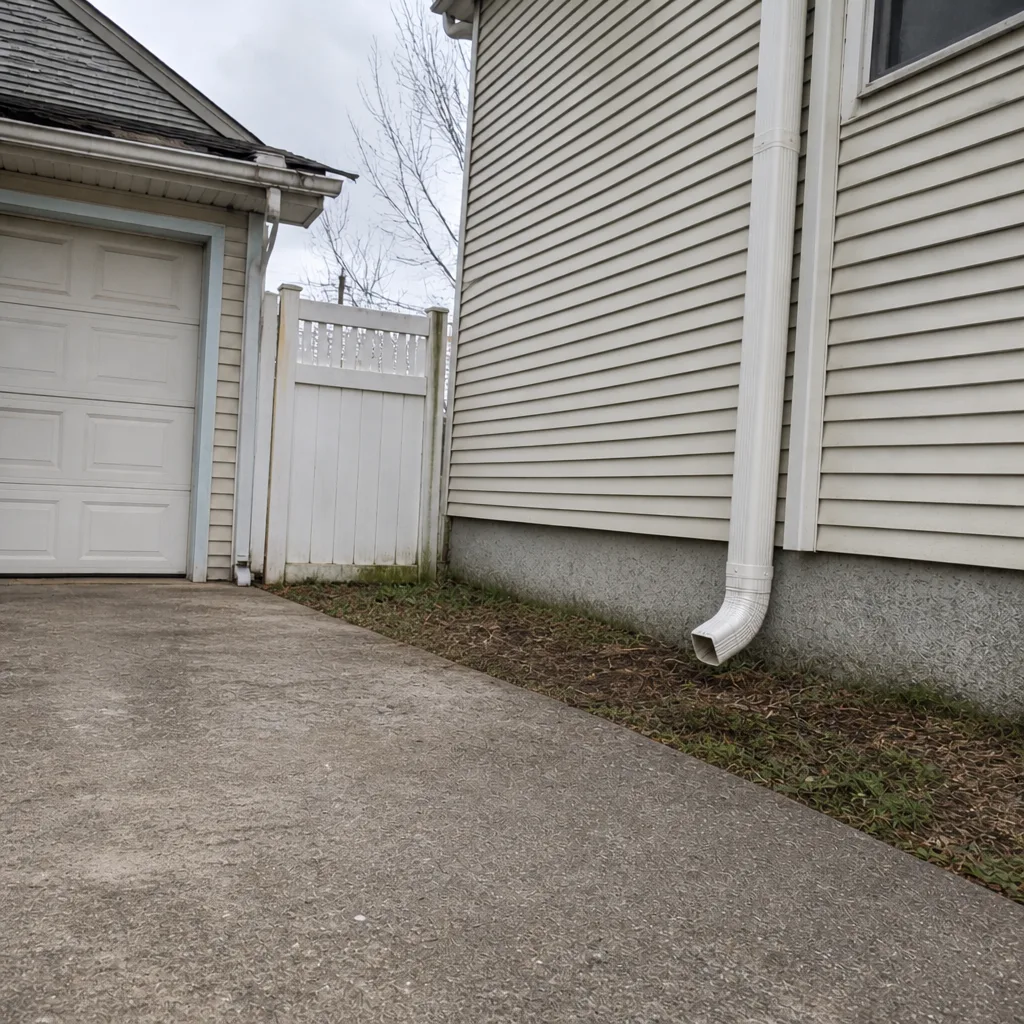 After
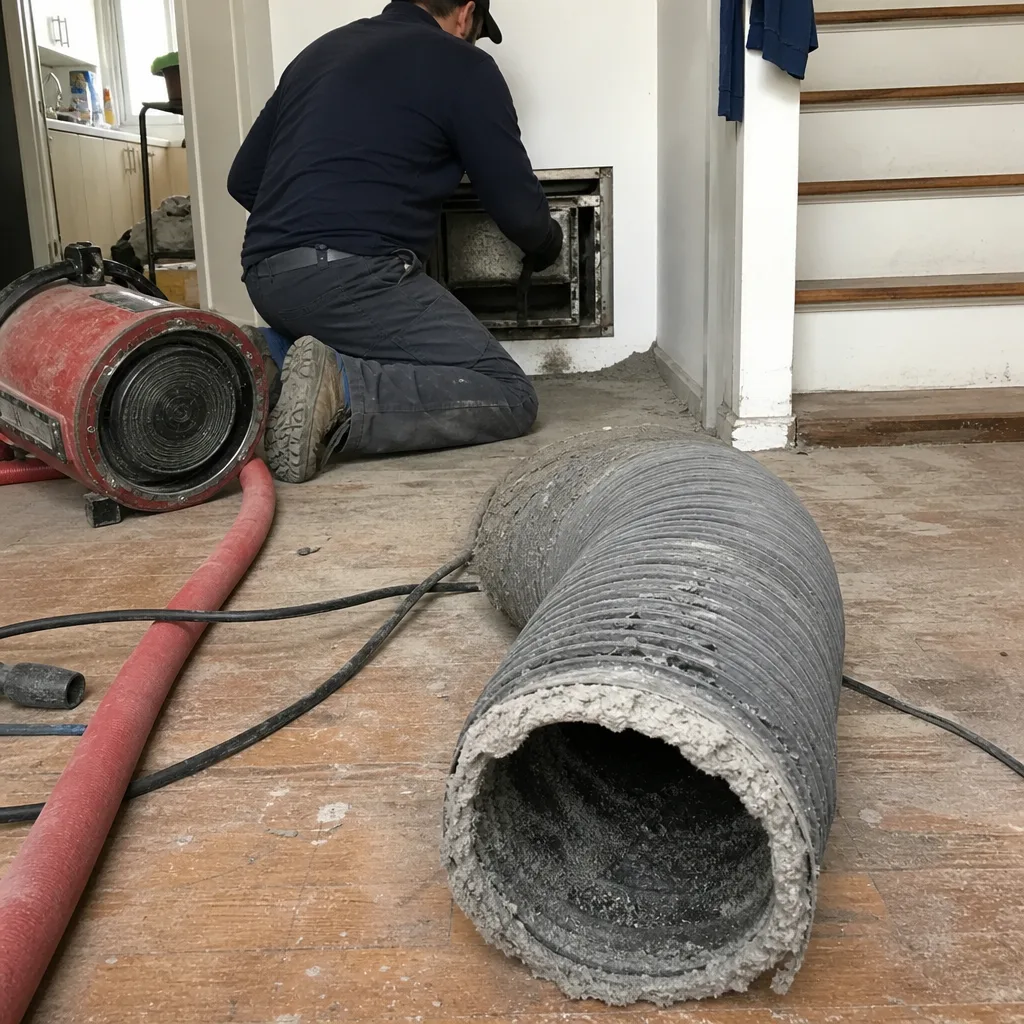 Before
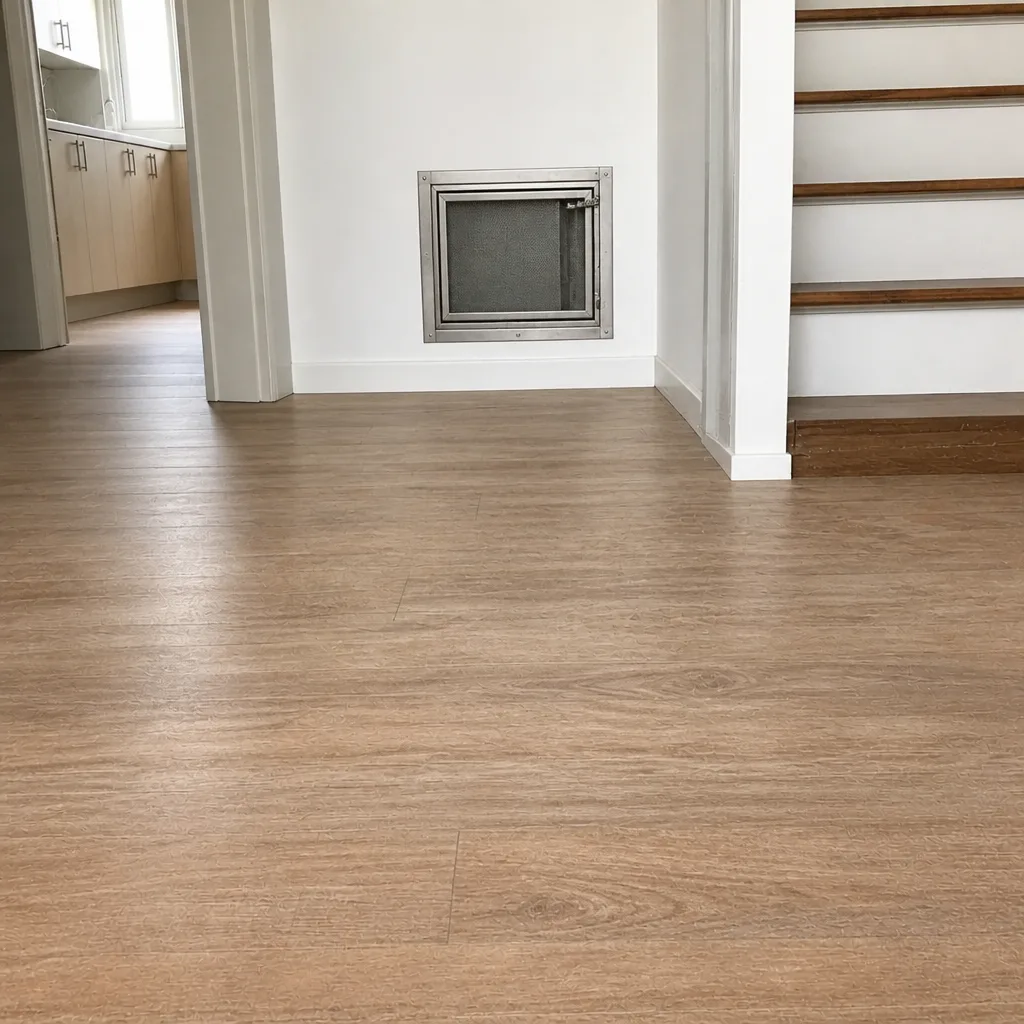 After
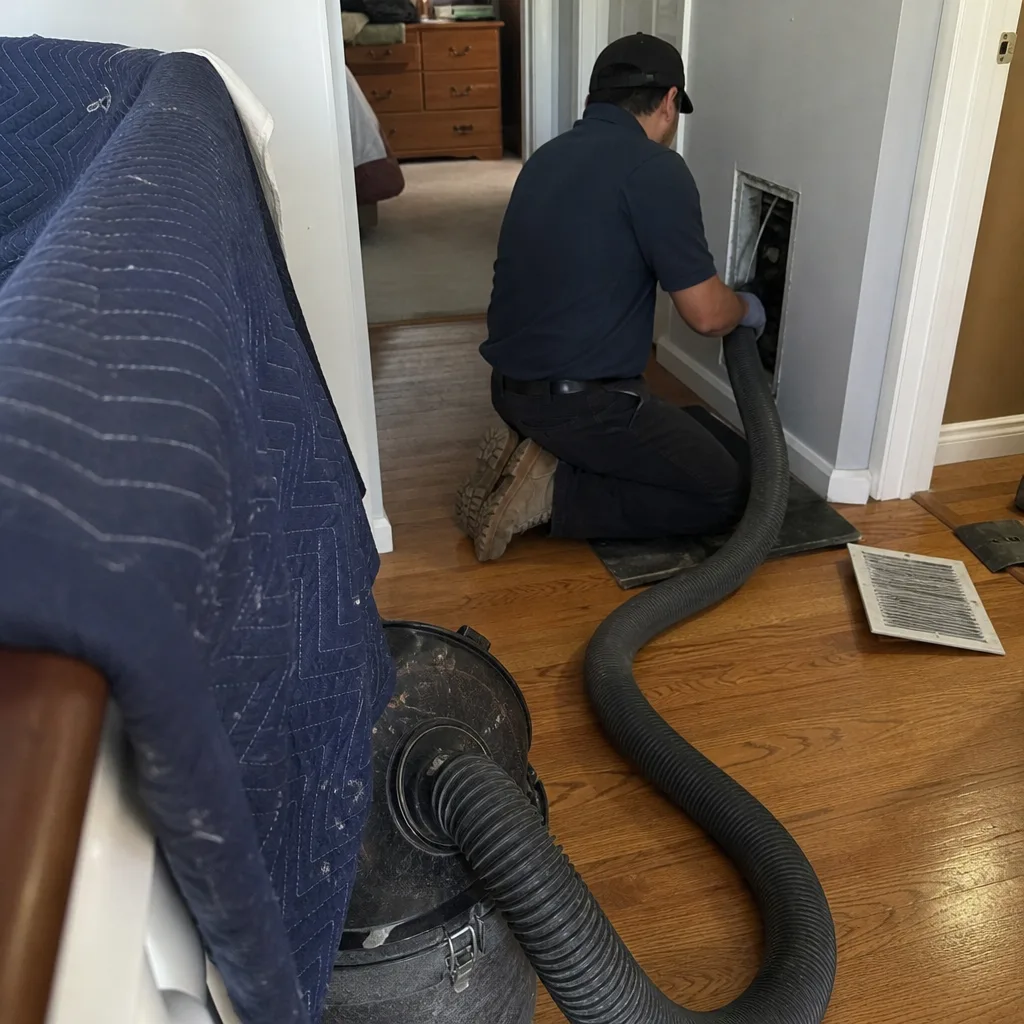 Before
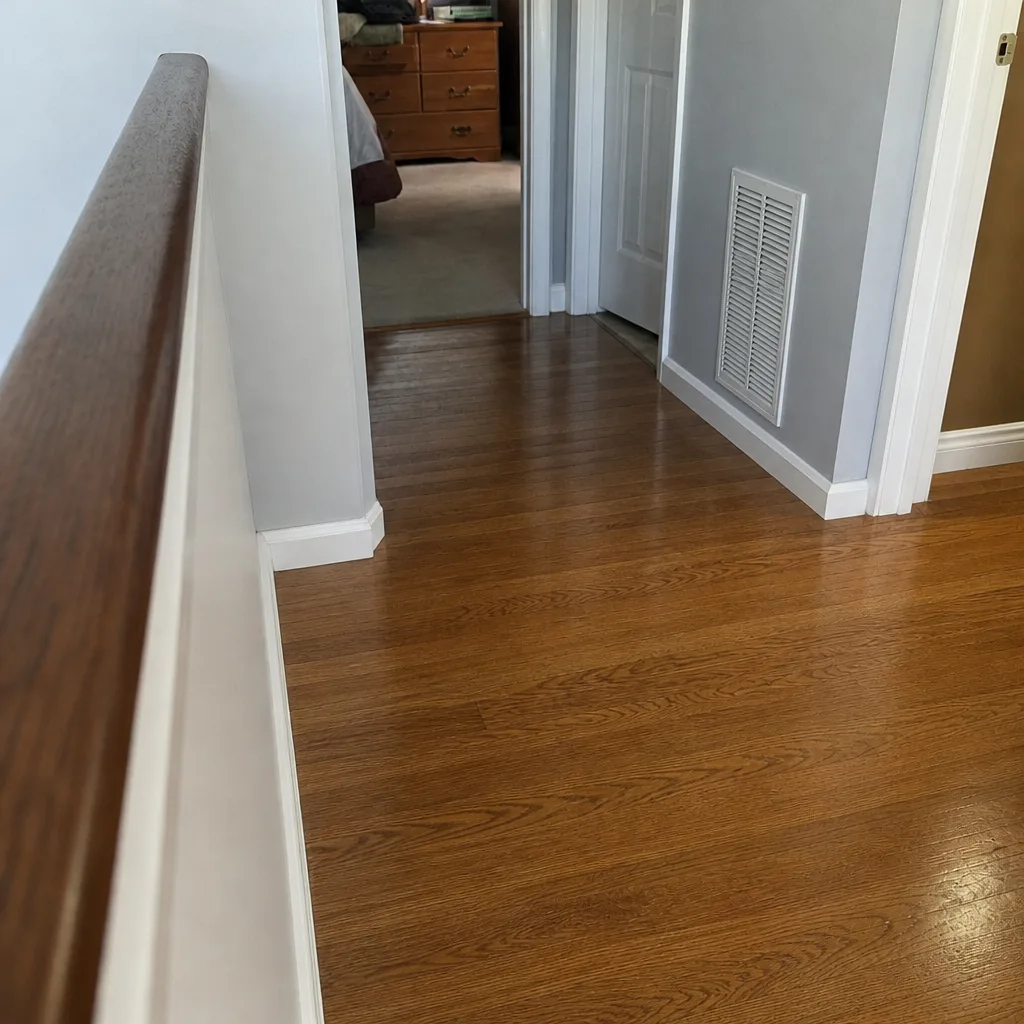 After
When to Call a Professional
Call a professional when you notice visible dust collecting around registers shortly after cleaning the room, persistent mustiness or a stale smell when the system runs, or a family member with allergies whose symptoms get worse indoors. Call after a renovation, when construction dust has been pulled into the return ducts. Call when you can see debris or lint around the dryer vent, or when the dryer takes longer than usual to dry a load. Call before a major season change if the system has not been cleaned in several years, and call if a home inspection flags disconnected or leaky duct runs. Air Duct Cleaning Astoria offers free estimates in Astoria. Call (855) 510-1266. We answer 24/7, with fast dispatch from 7am to 7pm, Sunday through Friday. The local pro is licensed and insured as their state requires, and the estimate is free.
Frequently Asked Questions
Air duct cleaning in Astoria typically costs $350 to $650 for a standard whole-system clean with 8 to 15 registers and the air handler included, and $600 to $900 for larger homes or difficult-access layouts. Entry-level flat-rate ads of $79 to $150 cover register-only vacuuming, not a whole-system clean. Call (855) 510-1266 for an exact quote. Estimates are free.
Cheaper quotes are cheaper because they cover less work. A low flat rate usually means register-to-boot vacuuming with no mechanical agitation inside the ducts and no air handler cleaning, and the advertised price is often a base that grows once the technician is on site. A legitimate whole-system clean can’t be delivered for under $150 once equipment and labor costs are counted. Ask both bids the same scope questions, then compare. Call (855) 510-1266 if you want a flat per-system price explained up front. Estimates are free.
You know the work was done when you see before-and-after photos of your own ducts and a written inspection note of what was found and cleaned. Photos of someone else’s system or a generic “after” shot are not proof. Ask for photos of your ducts specifically, and expect the air handler and coil to appear in the write-up. Call (855) 510-1266 to book an estimate. Estimates are free.
Most homes don’t need duct cleaning on a rigid schedule. Every three to five years is a reasonable default for a typical home, but renovation dust, a water event, pets, or a system with disconnected runs can justify a cleaning sooner. If you notice dust collecting around registers or a musty smell when the system runs, that’s a stronger signal than the calendar. Call (855) 510-1266 for an assessment. Estimates are free.
Sanitizing is worth it when there’s a real reason: visible microbial growth, a prior water event, or persistent mustiness after cleaning. On a dry, clean system with no odor, it’s usually optional. A technician who recommends sanitizing before the system is even cleaned is selling, not diagnosing. Call (855) 510-1266 to talk through what your system actually needs. Estimates are free.
Duct cleaning is rarely covered by homeowners insurance as routine maintenance, but a cleaning tied to a covered event such as a water loss or fire can sometimes be part of a claim. Check with your insurer about your specific policy before assuming. If a repair and sealing job is needed, we can work with your insurer on the documentation. Call (855) 510-1266 for a free estimate.
The Bottom Line
The $99 ad and the $600 quote are not the same service at different markups. One is register vacuuming; the other is a whole-system clean that includes mechanical agitation, the air handler and coil, and a documented before-and-after. In Astoria, a legitimate whole-system clean typically lands between $350 and $900, with the higher end reserved for larger homes, difficult access, and skip-the-register-only shortcuts. The framework that protects you is simple: one flat price per system agreed before work starts, a written scope that names the air handler and register count, and before-and-after photos of your own ducts. Compare on scope, not on total, and the right quote becomes obvious.
Ready to see what a real whole-system quote looks like for your home? Call (855) 510-1266. We answer 24/7, with fast dispatch from 7am to 7pm, Sunday through Friday. The estimate is free, and the written price is set per job before any work begins.
Written by the team at Air Duct Cleaning Astoria.